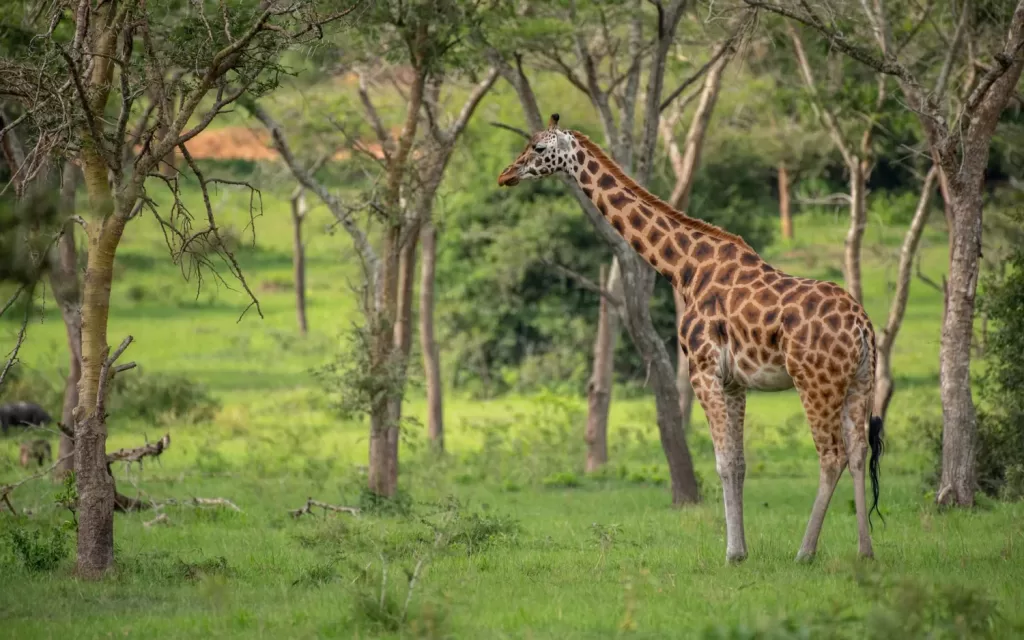
Discover Pian Upe Wildlife Reserve – Uganda’s Untamed Wilderness
Pian Upe Wildlife Reserve is Uganda’s second-largest protected area, covering approximately 2,788 square kilometres in the rugged northeastern region of Karamoja. The reserve lies strategically between Kidepo Valley National Park and Mount Elgon National Park, creating an important wildlife corridor across Uganda’s remote northeastern landscapes.
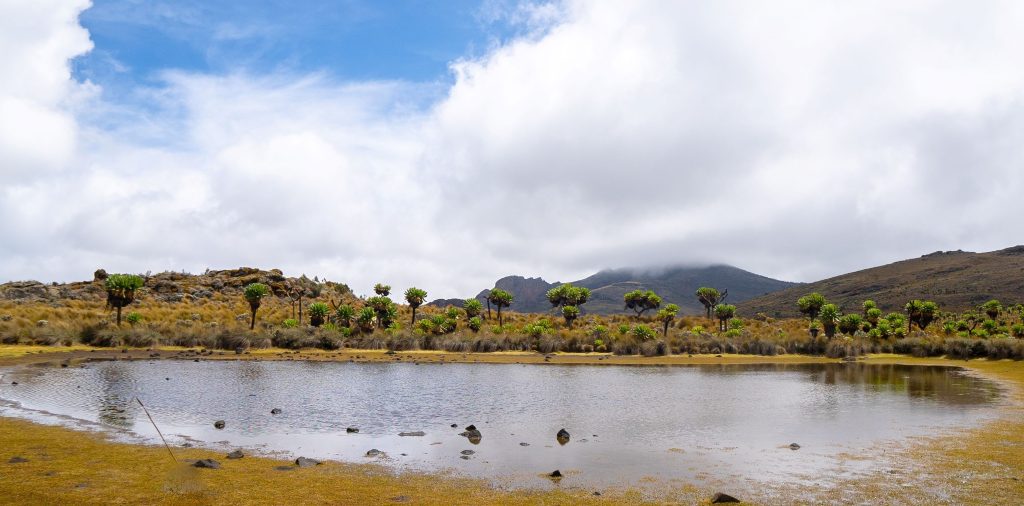
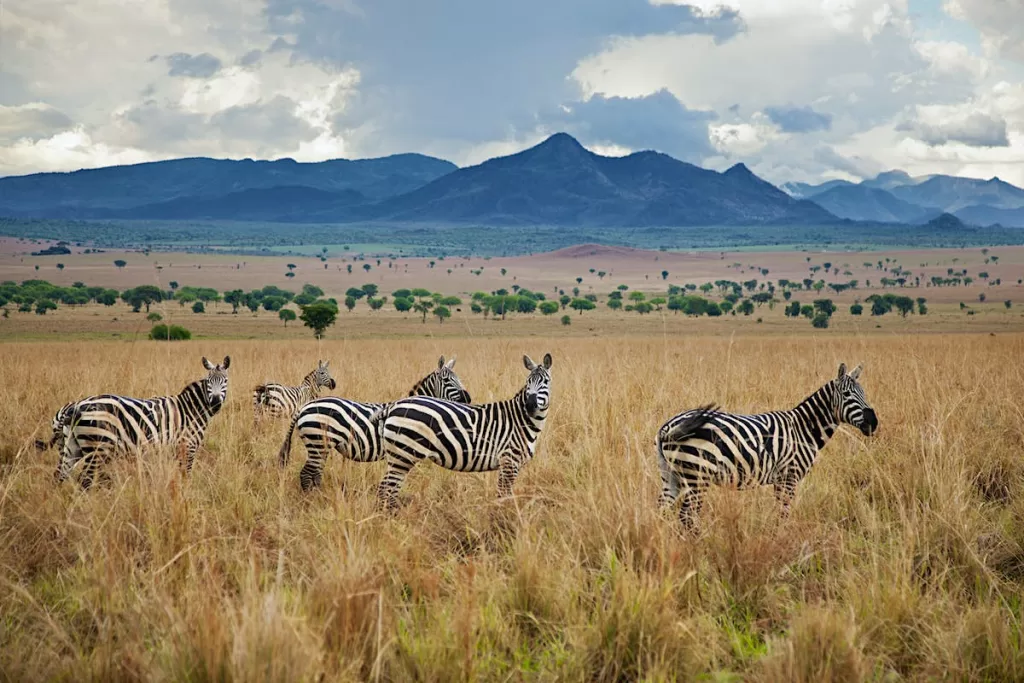
This vast wilderness is characterized by sweeping savannah plains, rocky outcrops, seasonal rivers, and dramatic mountain backdrops. Its relative isolation means fewer visitors, offering travellers a rare opportunity to experience Uganda’s wild landscapes in near solitude.
A Land of Cultural Heritage and Natural Beauty
The name Pian Upe honours the Pian and Upe communities, pastoralist groups whose traditions and livelihoods have shaped this region for generations.
Exploring the reserve offers not only wildlife encounters but also an opportunity to experience the vibrant cultural heritage of the Karamoja region, where cattle keeping, storytelling, traditional dances, and ancestral customs remain central to daily life.
Top Things to Do in Pian Upe Wildlife Reserve
Game Drives
Game drives across Pian Upe’s vast plains provide the chance to encounter some of Uganda’s rarest wildlife species. The reserve is particularly famous for the Roan Antelope, which is found almost exclusively in this region of Uganda. Visitors may also encounter:
Cheetah
Ostrich
Leopard
Spotted Hyena
Rothschild’s Giraffe
Plains Zebra
Günther’s Dik-dik
Common Duiker
Mountain Reedbuck
Aardvark
Primates in the reserve include:
Patas Monkey
Vervet Monkey
Olive Baboon
With its wide open terrain, wildlife sightings can be incredibly rewarding.
Birdwatching Paradise
Pian Upe Wildlife Reserve is a fantastic destination for bird enthusiasts, with over 240 recorded bird species.
The open plains and savannah woodland habitats support remarkable birdlife including:
Common Ostrich
Karamoja Apalis
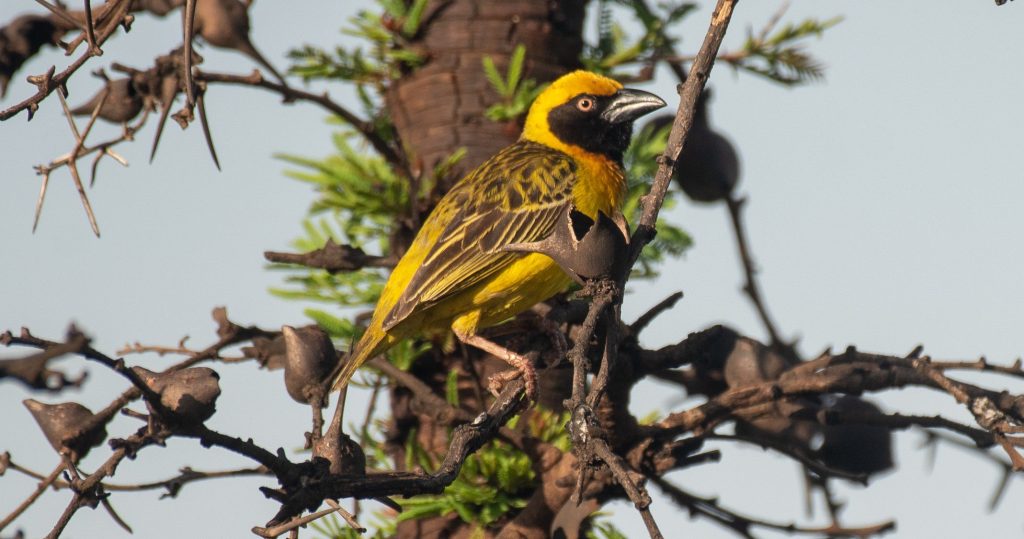
White-headed Buffalo Weaver
Jackson’s Hornbill
Birders often visit the Cheposukunya Hot Springs, a location that attracts numerous bird species and offers excellent birdwatching opportunities.
Mountain and Rock Climbing
The landscape surrounding Pian Upe is defined by dramatic mountain ranges and rocky formations. Adventurous travelers can climb Mount Kadam, the second-highest mountain in the Karamoja region, rising to approximately 3,063 metres above sea level.
Treks to the summit typically take two to three days, passing through:
Dense forests
Bamboo vegetation
Rocky ridges and scenic viewpoints
Designated camping areas allow hikers to spend nights surrounded by the sounds of the wilderness.
Nature Walks
Guided nature walks offer a more intimate way to explore Pian Upe’s pristine landscapes.
Walking through the reserve allows visitors to observe wildlife, birdlife, and reptiles while learning about the ecosystem from experienced guides.
Common sightings during walks include:
Patas monkeys
Vervet monkeys
Olive baboons
Numerous savannah birds and reptiles
Cultural Encounters
A visit to Pian Upe is also an opportunity to engage with the local communities. The Upe people, who speak a Kalenjin language, are closely related to the Pokot community of Kenya, while the Pian people belong to the Karamojong ethnic group.
Both communities are traditionally pastoralists, and cultural visits provide insight into:
Traditional cattle keeping
Local crafts
Cultural dances
Daily life in Karamoja
These encounters offer meaningful connections between visitors and the people who have lived in harmony with the land for generations.
Cave Exploration
Pian Upe is also known for fascinating cave exploration sites. The Napendio Cave contains ancient rock paintings believed to represent wildlife and early human life in the region.
Nearby, Napedet Cave features historical cooking stones and rock art depicting animals such as:
Elands
Warthogs
Giraffes
The views from these caves provide spectacular perspectives of the surrounding plains.
Best Time to Visit Pian Upe Wildlife Reserve
Pian Upe experiences two dry seasons and one rainy season. The best time to visit is from January to March, when wildlife gathers around water sources, making sightings easier.
Another good period is November to December, when the landscape remains green after the rains but temperatures are more comfortable.
During the rainy season from April to October, roads may become difficult to navigate and wildlife tends to spread across the reserve.
Where to Stay in Pian Upe Wildlife Reserve
Accommodation options in Pian Upe allow visitors to stay close to nature. The Uganda Wildlife Authority provides basic yet comfortable self-contained tents and cottages within the reserve.
Travellers seeking mid-range accommodation can stay at Karamoja Overland Camp, which offers en-suite safari tents and beautiful views of the surrounding wilderness.
Preparing for Your Pian Upe Safari
To ensure a comfortable experience, consider packing the following essentials:
Clothing: Light clothing for the hot daytime temperatures and warmer layers for cooler evenings.
Insect Repellent: Essential for protection from insects.
Hat and Hiking Shoes: A wide-brimmed hat and sturdy shoes help protect against the sun and rugged terrain.
Camera and Gadgets: The landscapes and wildlife provide excellent photography opportunities.
How to Get to Pian Upe Wildlife Reserve
Pian Upe Wildlife Reserve can be reached by road from Kampala. The journey takes approximately 8 hours, traveling east to Mbale and then continuing for about two hours to the reserve.
Another route approaches the reserve through Moroto, passing through Namalu Trading Centre before entering the protected area.
Plan Your Pian Upe Adventure
For travellers seeking remote landscapes, rare wildlife, and authentic cultural encounters, Pian Upe Wildlife Reserve offers one of Uganda’s most rewarding off-the-beaten-path safari experiences.
Contact Travelers Link Africa today to plan your Pian Upe safari and explore the hidden wilderness of northeastern Uganda.
Bwindi Impenetrable National Park: The Ultimate Gorilla Trekking Guide
Introduction to Bwindi Impenetrable National Park
Deep in the misty highlands of southwestern Uganda lies Bwindi Impenetrable National Park, one of Africa’s most extraordinary rainforests and the world’s premier destination for gorilla trekking in Uganda.
Designated as a UNESCO World Heritage Site, Bwindi is renowned for its remarkable biodiversity and its role in protecting the endangered mountain gorilla. Nearly half of the world’s remaining mountain gorillas live within this ancient forest.
Covering approximately 331 square kilometers, Bwindi stretches across the districts of Kanungu, Kabale, and Kisoro in the scenic Kigezi Highlands. The forest is believed to be over 25,000 years old, making it one of the oldest ecosystems in Africa.
Today, Bwindi stands as a global conservation success story and one of the most rewarding wildlife destinations on the African continent.
Why Bwindi Impenetrable National Park Is Famous
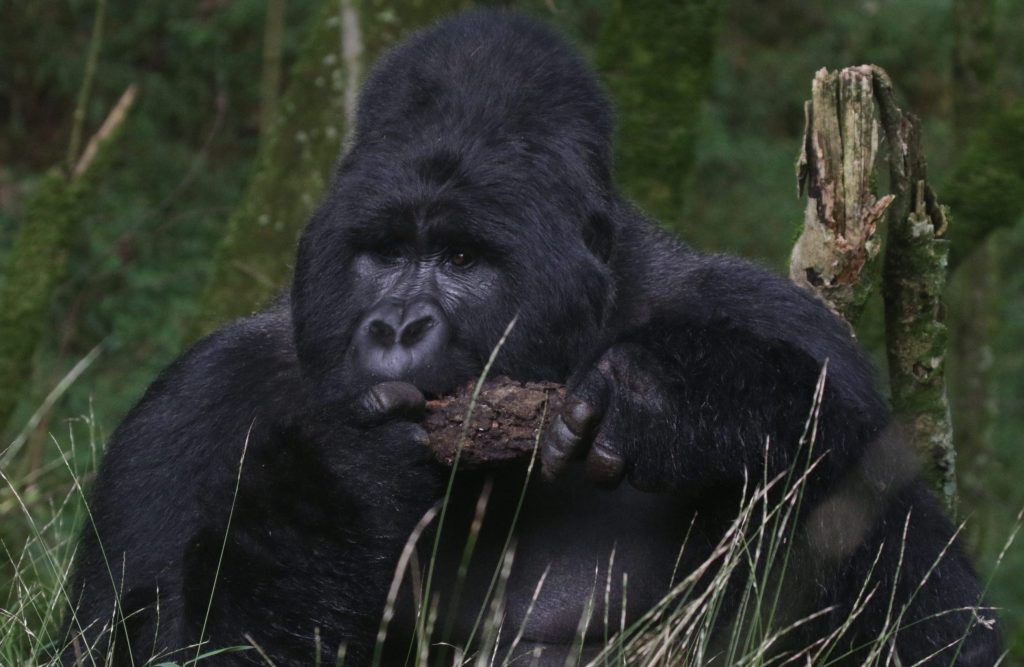
Bwindi is internationally known for its mountain gorilla population. The park is home to around 459 mountain gorillas, almost half of the global population.
These gentle giants live in family groups led by a dominant silverback, and visitors can observe them during carefully managed trekking experiences.
But gorillas are only part of Bwindi’s story. The park is also home to:
Over 350 bird species
120 mammal species
200 butterfly species
11 other primate species
This extraordinary biodiversity makes Bwindi one of Africa’s most important ecological hotspots.
Gorilla Trekking in Bwindi Impenetrable National Park
The highlight of any visit to Bwindi is the unforgettable experience of gorilla trekking.
Each morning begins with a briefing by rangers from Uganda Wildlife Authority, who explain safety guidelines and assign visitors to a specific gorilla family.
Trekkers then venture into the dense rainforest in small groups of no more than eight people.
The trek can take 1 to 8 hours, depending on the location of the gorilla family. Once located, visitors are allowed to spend one magical hour observing the gorillas in their natural habitat.
Watching gorillas feed, groom each other, and play within their family groups is widely considered one of the most moving wildlife encounters in the world.
Gorilla Trekking Sectors in Bwindi
Bwindi is divided into four main trekking regions, each offering unique landscapes and gorilla families.
Buhoma Sector
Located in the northern part of the park, Buhoma is the original trekking sector and home to the park headquarters.
Gorilla families here include:
Mubare
Habinyanja
Rushegura
Katwe
Muyambi
Buhoma also offers excellent forest walks and community experiences.
Ruhija Sector
The Ruhija sector lies on the eastern side of Bwindi and is known for spectacular viewpoints and birdwatching.
Gorilla families include:
Bitukura
Kyaguriro
Mukiza
Oruzogo
Ruhija is particularly popular with birder’s because of the nearby Mubwindi Swamp Trail.
Nkuringo Sector
Located in the southwestern corner of the park, Nkuringo is known for its dramatic landscapes and challenging treks.
Gorilla families include:
Nkuringo
Bushaho
Trekkers here are rewarded with breathtaking views of the Virunga Mountains.
Rushaga Sector
Rushaga, located in southern Bwindi, has the largest number of habituated gorilla families.
These include:
Nshongi
Mishaya
Kahungye
Busingye
Bikingi
Bweza
Rwigi
Kutu
Mucunguzi
Rushaga is also where visitors can participate in the Gorilla Habituation Experience.
Gorilla Habituation Experience
For travelers seeking a deeper encounter with mountain gorillas, Bwindi offers the unique Gorilla Habituation Experience.
Unlike the standard trek, visitors spend up to four hours with a gorilla family that is still becoming accustomed to human presence.
Only four visitors per group are allowed, accompanied by researchers and rangers studying gorilla behavior.
This rare experience takes place in the Rushaga and Nkuringo sectors.
Wildlife and Biodiversity in Bwindi
Bwindi’s dense rainforest supports an astonishing diversity of wildlife.
Other primates found in the forest include:
L’Hoest’s monkeys
Red-tailed monkeys
Blue monkeys
Black-and-white colobus monkeys
Olive baboons
Chimpanzees
Galagos and pottos
The forest is also a paradise for bird lovers. Bwindi hosts 23 bird species endemic to the Albertine Rift, including rare species like the African Green Broadbill.
Best Nature Walks and Hiking Trails in Bwindi
Bwindi offers exceptional hiking opportunities through ancient rainforest landscapes.
Popular trails include:
Rushura Hill Walk
A 3–4 hour hike offering panoramic views of Queen Elizabeth National Park, Lake Edward, and Lake George.
On clear days, visitors may even see the snow-capped Rwenzori Mountains.
Muzabajiro Loop Trail
A scenic 6 km trail leading to Rukubira Hill with views of the Virunga volcanoes and the western rift valley.
Mubwindi Swamp Trail
One of Africa’s best birdwatching trails, located in the Ruhija sector.
Bamboo Trail
A challenging hike reaching the park’s highest point at 2,607 meters, offering views of Lake Bunyonyi.
Cultural Experiences Around Bwindi
The communities surrounding Bwindi offer rich cultural encounters with the Bakiga and Batwa people.
Visitors can enjoy:
Village walks
Traditional dance performances
Visits to local craft centers
Interactions with community development projects
A highlight is the Batwa Cultural Experience, where visitors learn about the traditional forest lifestyle of the Batwa, the original inhabitants of Bwindi.
Guests can observe traditional hunting techniques, learn about medicinal plants, and listen to ancient songs and legends.
Why Bwindi Should Be on Your Safari Bucket List
Bwindi Impenetrable National Park is one of Africa’s most magical destinations. From the thrill of encountering mountain gorillas to the serenity of ancient rainforest landscapes, Bwindi offers an experience that is both humbling and unforgettable.
For travelers seeking a meaningful wildlife encounter and a deeper connection with nature, Bwindi stands among the greatest safari destinations on Earth.
Where to Stay in Bwindi National Park
Where to stay in Bwindi Impenetrable National Park depends on the sector for the gorilla trailhead, and below are the recommendations.
Buhoma Sector
The Haven Lodge
Haven Lodge is a mid-range lodge under Buhoma Community Rest Camp Ltd. The Haven Lodge has the most amazing views of the rainforest from its terraces. It features 8 beautifully designed twin/double cottages and 1 family cottage, all self-contained (en suite) and merging simple elegance with local materials.
Buhoma Lodge
The lodge features 10 en-suite chalets that have been individually designed and carefully built using locally sourced materials wherever possible. The chalets have their own private verandas, allowing wonderful views and vistas of the forest canopy of the Bwindi Impenetrable Forest National Park. Some chalets also offer a bathtub for relaxation and enjoyment after the day’s activities.
The family/honeymoon chalet, in addition to all of the above, also features a separate lounge room with an open fireplace.
Other facilities include a reception area, an open-air lounge, a bar area that offers uninterrupted views of the forest, a dining room, a spa treatment room, and a gift shop.
Mahogany Springs
Mahogany Springs Lodge is located in the Buhoma region of Bwindi Impenetrable National Park, within a 5–10-minute walk or a 2-minute drive of the gorilla trekking starting point.
Perched on top of the Munyanga River, overlooking Bwindi Impenetrable National Park, Mahogany Springs consists of 12 Luxury Suites, surrounded by beautiful gardens and panoramic views of the verdant valley.
The suites are categorized into Honeymoon Suite, Family Suite, which has 2 bedrooms, 2 en-suite bathrooms , and spacious living rooms that lead to private terraces, and 9 superior suites. Other facilities include a main area with a spacious restaurant, a panoramic terrace, a lounge, a bar, a massage parlor, and a gift shop.
Sanctuary Gorilla Forest Camp
Each tent has a spacious, stone-walled bathroom with private sections, and a free-standing bath for a relaxing soak after a day’s trekking. Other facilities include a bar and dining cottage overlooking the rainforest, and a raised natural platform is built for open-air dining.
The camp has a comfortable lounge with a well-stocked bar and elegant dining area, with great views over the verdant rainforest.
The mini spa at the Camp offers the perfect way to end a long day of gorilla trekking. The central campfire and swap stories of that day’s adventures.
Ruhija Sector
Gorilla Mist Camp
The camp features 12 rooms with views of the Bwindi Forest Canopy and Virunga mountain ranges. All the rooms are en-suite, spacious with twin beds, a flush toilet, a bathtub, and a balcony. Other facilities include a restaurant, a bar and lounge area, a massage parlor, and a gift shop.
Rushaga Sector
Gorilla Safari Lodge
This remote lodge comprises 21 deluxe chalets, each with private wooden balconies overlooking the wilderness. Each en-suite room has a wooden balcony with a view of the undulating jungle-covered landscape.
The balconies are furnished with a comfortable seating area, comprising chairs or couches. There are also small lounges/seating areas in each of the rooms.
Other facilities include the main lodge are,a which houses the dining room, a relaxation lounge, a spa treatment room, and a quaint nook where the bar is situated.
Chameleon Hill Lodge.
Perched high atop a hill, overlooking Lake Mutanda in South Western Uganda, is Chameleon Hill Lodge.
The lodge features 10 unique chalets, each with its own unique charm and character, with its own color scheme and private patio leading to the garden; they all share stunning views across the lake.
There is a modern en-suite bathroom and apparently the best showers in Uganda, with a panorama window to enjoy the lake and volcanoes even when you shower. Other facilities include the main building, which comprises a lounge and a library, and a dining room.
Ichumbi Gorilla Lodge
The lodge is a 10-minute walk from the Rushaga gate of Bwindi Impenetrable Forest. It has 10 spacious cottages, all en-suite with a private balcony to enjoy the views of the forest. The lodge is furnished with local materials from the local community. Other facilities include a dining room and bar/lounge.
Nkuringo Sector
Nkuringo Bwindi Gorilla Lodge
The Lodge features 11 private cottages, two family-style villas, and three luxurious suites nestled above the Bwindi on a forested ridge with distinctive elegance. All cottages are spacious and en-suite with locally styled furnishings.
Other facilities include a cozy dining and reception area, volcanic stone fireplaces, and walls. The lodge is entirely eco-friendly, using solar power for light, natural gas for heating and cooking, and rainwater harvesting.
It has an onsite fresh vegetable garden to supply the kitchen with your fresh veggie delights.
Clouds Mountain Gorilla Lodge
This community luxury lodge is the closest to the Nkuringo Gorilla Group and consists of a chalet-like main lodge. The 10 stone cottages are built from local volcanic stone and outfitted with handwoven rugs and works from the country’s most renowned artists.
The cottages have loft-like interiors with African-themed art, high-beamed ceilings, a spacious bedroom, a lounge area, and an en suite bathroom with a shower.
A fireplace links the bedroom and lounge, ensuring the rooms are cozy and warm in the cool evenings. Other facilities include a lounge area, dining room, a bar, a garden, and a terrace.
How to get to Bwindi Impenetrable National Park
Bwindi Impenetrable National Park can be easily accessed by air or road. Most travelers arrive in Uganda via Entebbe International Airport.
By Flight. There are two airstrips close to the Bwindi region – Kisoro and Kihihi – located just outside Bwindi Impenetrable National Park. Both airstrips offer daily flights from Entebbe, and the flight takes around 1.5 hours, and then a 1.5 – 2 hours drive to your lodge.
By driving from Kampala or Entebbe to Bwindi Impenetrable National Park. The drive takes 9-10 hours.
Best time to visit Bwindi Impenetrable National Park
Bwindi Park welcomes gorilla trekking throughout the year, with optimal times being:
June to August and December to February: During these periods, the forest trails are dry and less slippery, enhancing the overall experience. Photography becomes easier in these conditions.
March to May and October to December: This encompasses the long wet season, with September, October, November, and early December experiencing heavy rainfall.
The short wet season typically begins around mid to late February and continues through March, April, and May. Hiking trails become slippery, and visibility may be challenging during these times.
For bird watching enthusiasts, the best times are as follows:
November to April: These months attract migratory birds, offering a rich bird-watching experience.
December to February: Ideal for birding due to fewer rain showers.
May and June: Abundant food supply during this period, making it the main nesting season.
March to May: Heavy rains are common during these months, making hiking trails slippery.
Start Planning Your Gorilla Trekking Safari
Experience the magic of Bwindi Impenetrable National Park with a carefully crafted safari designed around your travel style.
Our team will help you:
Secure your gorilla trekking permits
Choose the best trekking sector
Combine Bwindi with other top parks like Queen Elizabeth National Park and Kibale National Park
Send us your travel dates and we will design your perfect Uganda safari.
Lake Bunyonyi Uganda – The Ultimate Travel Guide to the “Place of Many Little Birds”
Introduction to Lake Bunyonyi
Nestled in the scenic highlands of southwestern Uganda lies the breathtaking Lake Bunyonyi, one of East Africa’s most beautiful and peaceful destinations. Often referred to as the “Place of Many Little Birds,” the lake derives its name from the abundance of birdlife that inhabits its shores and surrounding forests.
Located close to the border with Rwanda, Lake Bunyonyi sits between the towns of Kabale and Kisoro, surrounded by steep terraced hills that form part of Uganda’s stunning Kigezi Highlands, also known as the Gorilla Highlands.
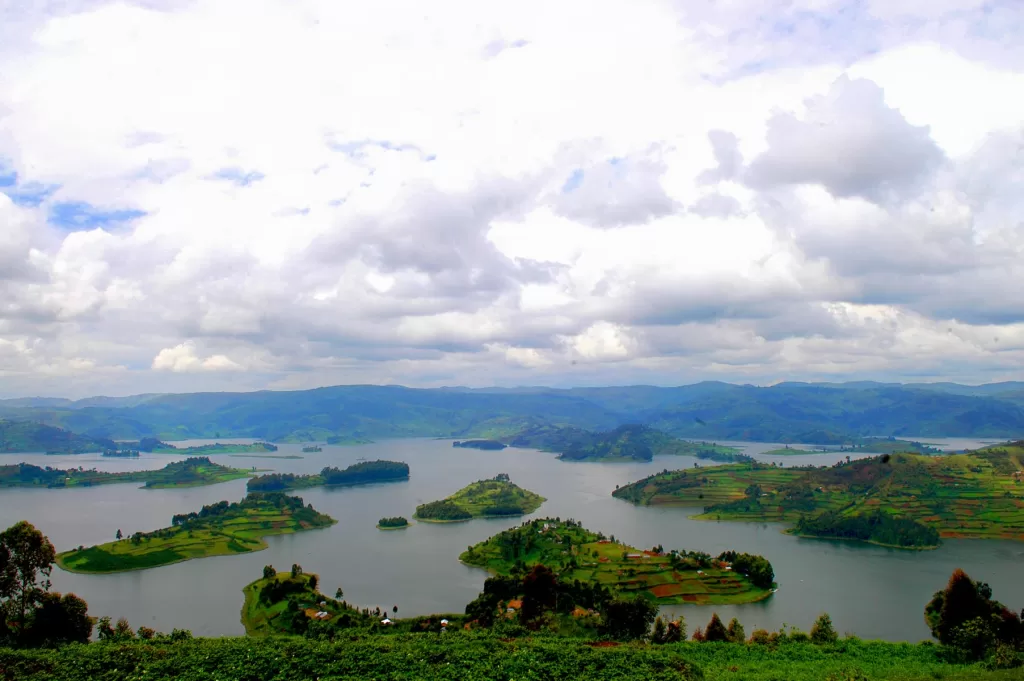
The lake is considered the second deepest lake in Africa, with depths reaching approximately 900 meters, rivaled only by Lake Tanganyika. Its tranquil waters are dotted with 29 picturesque islands, each carrying its own unique history, legends, and cultural significance.
Unlike many African lakes, Lake Bunyonyi is bilharzia-free and safe for swimming, making it a rare freshwater paradise where visitors can relax, explore islands, and immerse themselves in the rhythms of local life.
Today, Lake Bunyonyi has become one of Uganda’s most enchanting destinations, offering travelers a perfect blend of nature, culture, and relaxation, often combined with gorilla trekking in nearby Bwindi Impenetrable National Park for a gorilla trekking experience.
The Fascinating Islands of Lake Bunyonyi
One of the most distinctive features of Lake Bunyonyi is its 29 scenic islands, which rise dramatically from the calm waters and create a magical landscape of rolling hills and lush greenery.
Each island carries a story, some are inhabited by local communities while others remain untouched sanctuaries of nature.
Akampene – Punishment Island
Perhaps the most famous and haunting island on Lake Bunyonyi is Akampene, commonly known as Punishment Island.
Until the early 1940s, this tiny island was used as a place of exile for unmarried girls who became pregnant. According to traditional customs among the Bakiga people, families would abandon these young women on the island as a form of punishment and social deterrent.
With no means of survival and often unable to swim, many of the girls were left to face starvation.
Occasionally, however, impoverished young men who could not afford the customary bride price would paddle across the lake to rescue them, offering them a chance at life and marriage.
Today, Punishment Island stands as a powerful reminder of how cultural practices have evolved over time and is often visited during canoe excursions across the lake.
Njuyeera – Sharp’s Island
Another historically significant island is Njuyeera, commonly referred to as Sharp’s Island.
In 1921, an English missionary named Dr. Leonard Sharp arrived in the Lake Bunyonyi region. He built a small cottage on the island, which led to its local name “Njuyeera,” meaning “white cottage.”
Sharp later established a leprosy treatment center on nearby islands, turning the area into an important medical mission.
During this time, Sharp transformed the island into a vibrant settlement featuring:
A tennis court
A boat house
A guest cottage
A windmill
Gardens filled with lemon trees, guava trees, and flowering plants
His work helped establish Lake Bunyonyi as an important center for medical care and community development.
Bwama Island
Bwama Island holds one of the most fascinating historical stories in the region.
In 1914, the island was used as a base by the anti-colonial rebel leader Katuregye. A few years later, Dr. Leonard Sharp established a hospital, church, and living quarters for leprosy patients on the island.
For decades, Bwama Island served as one of the most important leprosy treatment centers in East Africa.
After the introduction of effective anti-leprosy medicines in the 1980s, the hospital closed and the buildings were transformed into a boarding secondary school and primary school, which still operate today.
Bucuranuka – “Upside Down Island”
Another intriguing island is Bucuranuka, often called Upside Down Island.
Local legend tells the story of villagers brewing traditional sorghum beer who refused to share their drink with an elderly woman who had asked politely.
Feeling insulted, the woman asked a young boy to help her cross the lake to the mainland. When they reached the shore, she stepped off the canoe while the boy remained behind.
As he turned back to look at the island, he witnessed something extraordinary, the island had flipped upside down, drowning everyone who had refused to help the woman.
The story is often shared as a traditional moral lesson about generosity, kindness, and respect for strangers.
Top Things to Do at Lake Bunyonyi Uganda
Lake Bunyonyi offers a variety of activities for travelers seeking adventure, culture, and relaxation in one of Uganda’s most beautiful landscapes.
Canoe Trekking on Lake Bunyonyi Uganda
Exploring Lake Bunyonyi in a traditional dugout canoe is one of the most authentic experiences visitors can enjoy.
Local guides paddle visitors across the calm waters while sharing stories about the lake’s islands, history, and traditions.
Canoe excursions typically include visits to:
Punishment Island
Bwama Island
Bushara Island
Along the way, visitors can observe birdlife, visit island communities, and learn about the traditional medicinal plants used by the Bakiga people.
Birdwatching in Echuya Forest Reserve
Just a short distance from the lake lies Echuya Forest Reserve, one of the best birding destinations in southwestern Uganda.
The forest is home to approximately 150 bird species, including several Albertine Rift endemics such as the rare Grauer’s Swamp Warbler.
Other species found here include:
Red-throated Alethe
Kivu Ground Thrush
Archer’s Robin-Chat
Mountain Masked Apalis
Regal Sunbird
Brown-capped Weaver
The forest also hosts primates like blue monkeys, black-and-white colobus monkeys, and baboons, along with butterflies and small mammals.
Cultural Encounters with the Batwa People
Visitors can participate in a Batwa cultural experience in the nearby Echuya Forest.
The Batwa people, often referred to as the original forest dwellers of the region, share their traditional knowledge of hunting, herbal medicine, and forest survival.
During guided walks, visitors learn about:
Traditional medicinal plants
Hunting techniques
Batwa music and storytelling
Daily life in the Batwa community
These experiences provide insight into the challenges and resilience of indigenous communities adapting to modern life.
Culture on the Crest Experience
This half-day cultural adventure takes visitors through the terraced hillsides of the Kyabahinga Peninsula, offering stunning views of Lake Bunyonyi and its islands.
The experience includes:
Performances by local school children
Tasting obushera, a traditional millet drink
Hiking to scenic viewpoints overlooking the lake
Visits with traditional healers who explain the medicinal uses of local plants
Encounters with local craft makers
The journey ends with a peaceful canoe ride back across the lake.
Coffee Walking Tour
The fertile highlands around Lake Bunyonyi are ideal for growing Arabica coffee, and visitors can participate in a fascinating coffee tour with local farmers.
The experience begins near Kisoro, where guests visit a family coffee farm and learn about:
Coffee cultivation
Differences between Arabica and Robusta coffee
Coffee harvesting and processing
Traditional roasting techniques
Guests can even participate in roasting the beans and enjoy a freshly brewed cup of locally grown coffee.
Mountain Biking Around Lake Bunyonyi
The terraced hills surrounding Lake Bunyonyi create spectacular terrain for mountain biking.
Guided biking tours allow visitors to explore local villages, farmland, and scenic viewpoints while interacting with the local community.
Bikes can be rented from several lodges, including Lake Bunyonyi Rock Resort.
Ziplining Over Lake Bunyonyi
Adventure seekers can enjoy a thrilling zipline experience at Supreme Adventure Park.
Suspended between trees across the lake’s shores, the zipline allows visitors to glide above the water while enjoying panoramic views of the surrounding hills and islands.
Where to Stay at Lake Bunyonyi
Lake Bunyonyi offers a variety of accommodations ranging from eco-lodges to luxury resorts.
Recommended options include:
Birdnest Resort @ Bunyonyi – a lakeside lodge with panoramic views and modern amenities.
Lake Bunyonyi Eco Resort – an eco-friendly lodge located on a secluded island.
Heritage Lodge Habuharo – a peaceful lodge surrounded by forest on a private island.
Lake Bunyonyi Rock Resort – a comfortable lodge popular with travelers exploring the Gorilla Highlands.
Best Time to Visit Lake Bunyonyi Uganda
Lake Bunyonyi is a year-round destination, but the best time to visit is during Uganda’s dry seasons:
June to August
December to February
These months provide ideal conditions for hiking, canoeing, and outdoor exploration.
The green seasons from March to May and September to November bring lush landscapes and excellent birdwatching opportunities.
How to Get to Lake Bunyonyi Uganda
Lake Bunyonyi lies approximately 8 hours by road from Kampala, Uganda’s capital.
Many travelers visit the lake after gorilla trekking in Bwindi Impenetrable National Park or Mgahinga Gorilla National Park.
Visitors traveling from Kigali in Rwanda can reach the lake in about 2.5 to 3 hours by road.
Domestic flights from Entebbe International Airport to Kisoro Airstrip provide another convenient option.
Why Lake Bunyonyi Should Be on Your Uganda Itinerary
With its mist-covered hills, tranquil waters, fascinating island stories, and rich cultural heritage, Lake Bunyonyi is one of Uganda’s most enchanting destinations.
Whether paddling across the lake in a dugout canoe, exploring nearby forests, or simply relaxing at a lakeside lodge, visitors quickly discover why Lake Bunyonyi is often described as one of Africa’s most beautiful lakes.
For travelers exploring Uganda’s Gorilla Highlands, a stay at Lake Bunyonyi offers the perfect opportunity to slow down, reconnect with nature, and experience the timeless beauty of the African highlands.
Ready to Experience Lake Bunyonyi?
Discover the breathtaking beauty of Lake Bunyonyi, famous for its scenic islands, peaceful waters, canoeing adventures, and stunning terraced hills. Whether you are looking for relaxation, cultural experiences, or a perfect stop after gorilla trekking in Bwindi Impenetrable National Park, we will help you create an unforgettable journey.
Our travel experts at Travelers Link Africa will design a personalized Uganda safari tailored to your interests and travel style.
Mgahinga Gorilla National Park – Gorilla Trekking & Travel Guide
Nestled in southwestern Uganda, Mgahinga Gorilla National Park is the country’s smallest national park, covering just 34 square kilometers, yet it offers some of the most extraordinary wildlife experiences in East Africa. The park lies within the famous Virunga Mountains, a chain of volcanic mountains shared by Uganda, Rwanda, and the Democratic Republic of Congo.
Despite its size, the park is a spectacular destination for gorilla trekking in Uganda, serving as an alternative to Bwindi Impenetrable National Park. Visitors are drawn by its dramatic volcanic landscapes, rich biodiversity, and unique cultural experiences.
The name “Mgahinga” comes from the Kinyarwanda word “Gahinga,” meaning piles of volcanic stones cleared from farmland. Today, the park is a vital conservation area protecting endangered mountain gorillas and rare wildlife species within the Virunga ecosystem.
The Volcanic Peaks of Mgahinga
One of the defining features of Mgahinga Gorilla National Park is its three majestic volcanoes, each offering breathtaking scenery and challenging hiking adventures.
Mount Muhavura (4,127 m)
Known as “The Guide,” Mount Muhavura towers above the surrounding landscape. Its summit features a beautiful crater lake and offers sweeping views across Uganda, Rwanda, and the Democratic Republic of Congo.
Mount Gahinga (3,474 m)
Mount Gahinga is characterized by a swamp-filled crater at its summit and dense bamboo forests along its slopes.
Mount Sabinyo (3,645 m)
The rugged Mount Sabinyo resembles an old man’s teeth due to its jagged peaks and deep gorges. Hiking this mountain allows visitors to stand at the point where Uganda, Rwanda, and the Democratic Republic of Congo meet.
The park ranges in altitude from 2,227 meters to 4,127 meters, creating a variety of habitats for wildlife and birds.
Wildlife in Mgahinga Gorilla National Park
The park is best known for its mountain gorillas, but it is also home to many other species.
Wildlife found in Mgahinga Gorilla National Park includes:
Mountain gorillas
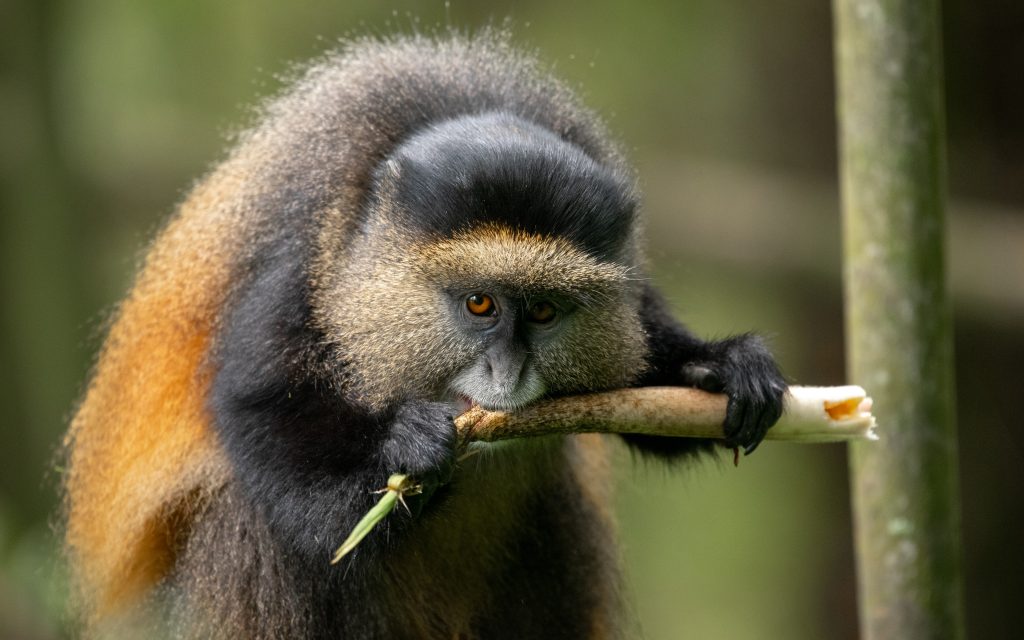
Golden monkeys
Black-and-white colobus monkeys
Forest elephants
Giant forest hogs
The park hosts around 76 mammal species and more than 115 bird species, including several Albertine Rift endemics.
Bird enthusiasts may spot species such as:
Rwenzori Turaco
Kivu Ground Thrush
Blue-headed Sunbird
Rwenzori Batis
Top Things to Do in Mgahinga Gorilla National Park
Gorilla Trekking
Gorilla trekking is the most popular activity in Mgahinga Gorilla National Park. Visitors track the famous Nyakagezi Gorilla Family, a habituated group known for its stability and fascinating social interactions.
Key facts about gorilla trekking:
Treks start at 8:00 AM with a briefing by Uganda Wildlife Authority rangers.
Only 8 visitors per gorilla group per day are allowed.
Trekking can last 1 to 8 hours, depending on the gorillas’ location.
Visitors spend one magical hour observing the gorillas once they are found.
Golden Monkey Tracking
Another highlight of visiting Mgahinga Gorilla National Park is tracking the rare golden monkeys, a species found only in the Virunga region.
During the Golden Monkey Habituation Experience, visitors can observe these playful primates for several hours as they:
forage for bamboo shoots
groom each other
leap between trees
The activity provides fantastic opportunities for wildlife photography.
Batwa Cultural Trail
The Batwa Cultural Trail introduces visitors to the indigenous Batwa people, the original forest dwellers of the Virunga forests.
During the guided experience, visitors learn about:
traditional hunting techniques
honey harvesting
medicinal plants
bark cloth making
The trail also leads to the historic Garama Cave, where the Batwa once held ceremonies and community gatherings.
Nature Walks and Forest Exploration
Guided nature walks through Mgahinga Gorilla National Park reveal incredible biodiversity.
Popular trails include:
Rugezi Swamp Walk
Sabyinyo Gorge Trail
Bamboo forest hikes
Along the way, visitors may see birds, monkeys, and spectacular views of the Virunga volcanoes.
Volcano Hiking
Adventure seekers can climb the park’s three volcanoes:
Mount Muhavura
Mount Gahinga
Mount Sabinyo
Each hike passes through several vegetation zones and offers breathtaking views of the Virunga Mountains, the Rwenzori ranges, and nearby national parks.
Where to Stay Near Mgahinga Gorilla National Park
Visitors to Mgahinga Gorilla National Park can choose from several comfortable lodges.
Mount Gahinga Lodge
Located at the park’s edge, Mount Gahinga Lodge offers luxury chalets with views of the Virunga volcanoes.
Lake Mulehe Safari Lodge
Lake Mulehe Safari Lodge features spacious cottages overlooking Lake Mulehe and the Virunga Mountains.
Travelers Rest Hotel
The historic Travelers Rest Hotel was once frequented by famous primatologist Dian Fossey.
Best Time to Visit Mgahinga Gorilla National Park
The best time to visit Mgahinga Gorilla National Park is during the dry seasons:
December to March
June to August
During these months, trails are easier to navigate, making gorilla trekking and hiking more comfortable.
The wet seasons (April–May and September–November) bring lush scenery and excellent birdwatching opportunities.
How to Get to Mgahinga Gorilla National Park
By Road
Travelers can drive from Kampala to Kisoro, a journey of about 8–9 hours through the scenic highlands of southwestern Uganda.
By Air
Flights from Entebbe International Airport to Kisoro Airstrip take approximately 1 hour and are operated by domestic airlines.
Plan Your Mgahinga Gorilla Safari
Experience unforgettable wildlife encounters in Mgahinga Gorilla National Park, from gorilla trekking and golden monkey tracking to volcano hiking and cultural experiences.
Combine your visit with nearby destinations such as Bwindi Impenetrable National Park or Lake Bunyonyi for a complete southwestern Uganda safari adventure.
Book Your Mgahinga Gorilla Safari Today! Experience mountain gorillas, golden monkeys, and the majestic Virunga volcanoes. Contact Travelers Link Africa now for a tailor-made itinerary.
Rwenzori Mountain National Park: Africa’s Majestic Mountains of the Moon
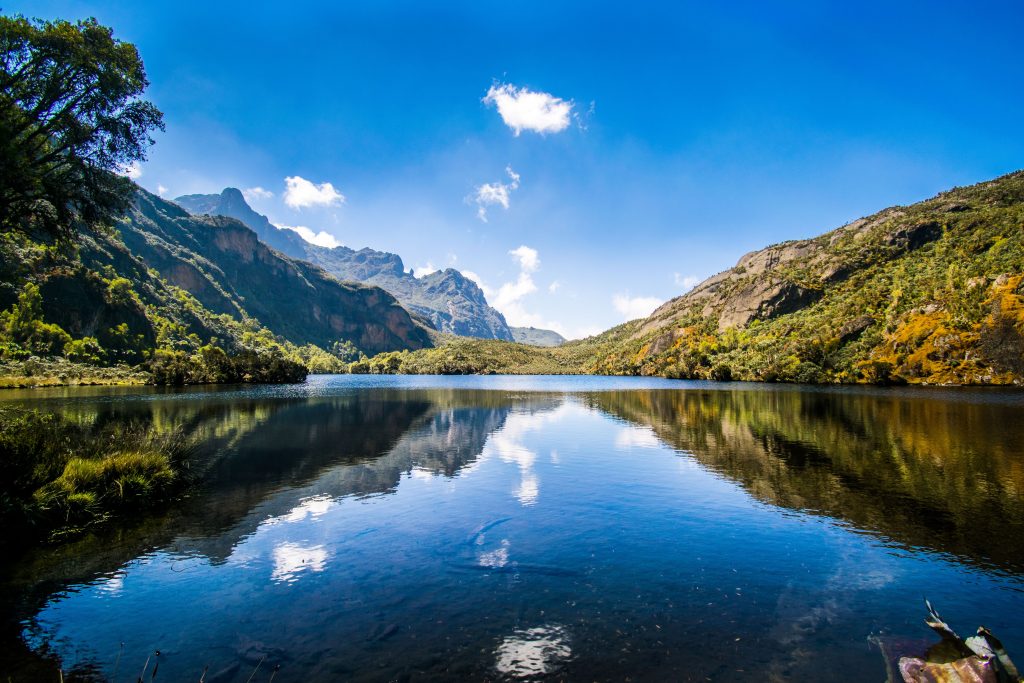
Perched in western Uganda along the Uganda-Congo border, Rwenzori Mountain National Park sprawls over 996 sq km and is recognized as a UNESCO World Heritage Site. Celebrated as the “Mountains of the Moon,” Rwenzori is a realm of snow-capped peaks, glaciers, cascading waterfalls, clear alpine lakes, and lush montane forests.
This remarkable destination appeals to adventurers, wildlife lovers, birdwatchers, and cultural enthusiasts alike. Its alpine beauty, biodiversity, and rich heritage make it one of Africa’s most captivating natural treasures.
Why Visit Rwenzori Mountain National Park?
UNESCO World Heritage Site: Preserving unique alpine ecosystems and glacial landscapes.
Challenging Peaks: Home to Africa’s third-highest summit, Mt. Margherita (5,109 m).
Biodiversity Hotspot: 70+ mammals and 217 bird species, including 19 Albertine Rift endemics.
Cultural Encounters: Interact with the Bakonzo people, explore sacred sites, and enjoy local traditions.
Adventure Tourism: Mountaineering, guided nature walks, birdwatching, and photography.
Rwenzori Mountain National Park offers experiences for all adventurers, from gentle cultural treks to high-altitude alpine climbing.
Rwenzori Peaks and Glaciers
The Rwenzori Mountains’ glacial peaks, deep valleys, and cascading waterfalls are legendary:
Mt. Margherita (5,109 m): The park’s tallest peak and the ultimate mountaineering challenge.
Mt. Albert (5,087 m): Features glacial lakes and breathtaking alpine vistas.
Mt. Alexandra (5,083 m): Ideal for high-altitude explorers seeking remote scenery.
Other Peaks: Mt. Emin (4,791 m), Mt. Gessi (4,751 m), Mt. Luigi da Savoia (4,627 m).
The mountains are the source of the River Nile, supporting downstream ecosystems and communities. V-shaped valleys, fast-flowing rivers, and waterfalls define the park’s alpine landscape, making it a natural wonder for photographers and nature lovers.
Alpine Flora: Africa’s Botanical Treasures
Rwenzori is home to unique alpine flora:
Forest Zone (1,800–2,500 m): Dense montane forests with endemic trees, ferns, and orchids.
Bamboo Zone (2,500–3,000 m): Bamboo thickets provide habitat for primates and birds.
Giant Lobelia & Heather Zone (3,000–4,500 m): Iconic African alpine plants like giant lobelias, groundsels, and heathers.
This layered ecosystem is perfect for nature photography, research, and ecological tours. The combination of flora and glaciers makes Rwenzori one of the most biodiverse alpine areas in Africa.
Wildlife in Rwenzori Mountain National Park
The park is rich in wildlife diversity, offering encounters with unique species:
Weather-resistant huts for long treks with comfort and safety
Best Time to Visit Rwenzori Mountain National Park
Dry Seasons: June–August & December–February for mountaineering and clear summit views
Wet Seasons: March–May & September–November for lush scenery and birding; trails may be slippery
Tip: Dry season is preferred for glacier hikes, wet season for photography and vibrant vegetation.
How to Get There
By Road
300–350 km from Kampala via Fort Portal or Masaka–Mbarara–Kasese
By Air
Flights from Entebbe International Airport to Kasese Airstrip (1h30m)
40-minute transfer to the park
Operators: Aerolink Uganda
Embark on the adventure of a lifetime! Explore the snow-capped peaks, glaciers, and waterfalls of the Rwenzori Mountains while immersing yourself in Bakonzo culture. Book your unforgettable Rwenzori Mountain National Park experience with Travelers Link Africa today!
Semuliki National Park – Uganda’s Unique Lowland Tropical Forest
Semuliki National Park is one of Uganda’s most unique and biologically rich destinations. Established as a forest reserve in 1932 and upgraded to national park status in 1993, it protects the only true lowland tropical rainforest ecosystem in East Africa.
Located in western Uganda within the Albertine Rift Valley, the park covers about 220 square kilometres and lies near the borders of the Democratic Republic of the Congo. The park stretches across the Semuliki Valley floor and forms part of the greater Semuliki Wildlife Reserve landscape.
This lush forest is an extension of the vast Congo Basin, making it ecologically different from most Ugandan parks. Its rich biodiversity, spectacular landscapes, and unique cultural heritage make Semuliki a hidden gem for nature lovers, birders, and adventurous travelers.
From elevated viewpoints, visitors enjoy sweeping views of the Rwenzori Mountains, the dramatic Rift Valley escarpment, and the distant Blue Mountains (Democratic Republic of the Congo).
Wildlife in Semuliki National Park
Wildlife viewing in Semuliki National Park is more subtle compared to other Ugandan parks, but the forest hides a fascinating variety of species.
The park is home to 53 recorded mammal species and numerous primates including:
Grey-cheeked mangabey
Black-and-white colobus monkeys
Central African red colobus
Vervet monkeys
Red-tailed monkeys
De Brazza’s monkeys
Olive baboons
Night walks may reveal nocturnal species such as bushbabies and potto.
Large mammals such as elephants, buffaloes, and waterbucks inhabit the park, although sightings can be unpredictable due to the dense forest. Leopards occasionally appear during night drives, while lions are more often heard than seen.
Despite the elusive nature of some wildlife, the park’s pristine rainforest offers an authentic wilderness experience.
Top Things to Do in Semuliki National Park
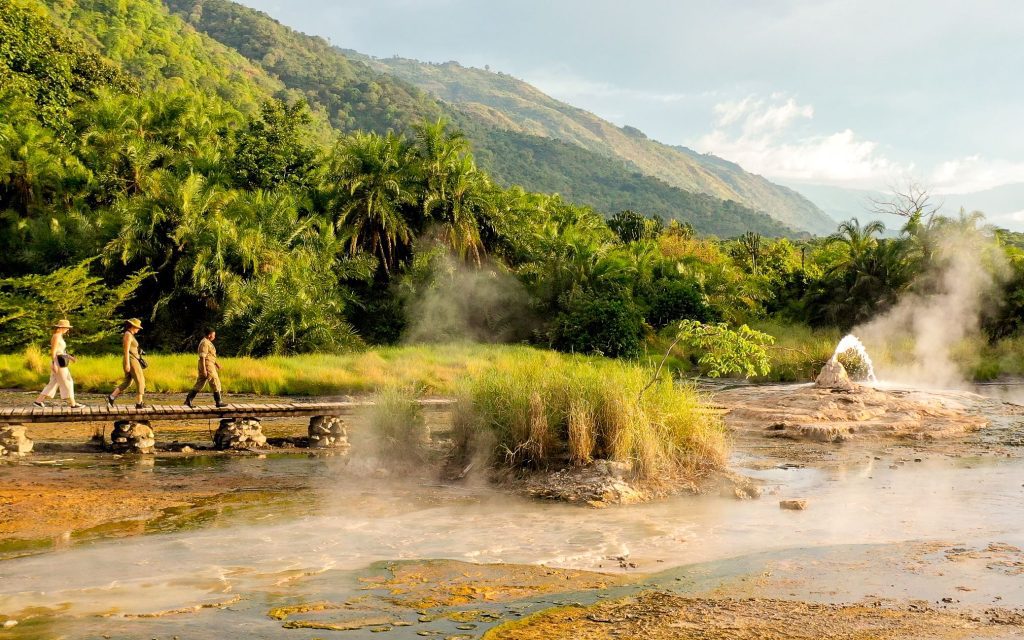
Explore the Sempaya Hot Springs
The most famous attraction in the park is the spectacular Sempaya Hot Springs.
These geothermal wonders include:
Male Hot Spring – Bitende
About 12 metres wide
Produces constant boiling water
Female Hot Spring – Nyasimbi
A dramatic geyser that shoots boiling water nearly 2 metres high
Visitors can even cook eggs or matooke in the naturally boiling water, a memorable experience during the walk through the surrounding palm forest.
Game Drives in Semuliki National Park
Although the park is forest-dominated, several tracks offer opportunities for wildlife viewing.
Elephant Track
This route offers chances to encounter forest elephants, waterbucks, and other forest wildlife moving between feeding areas.
Antelope Track
Visitors may see Uganda kob, pygmy antelopes, and other grazing animals among open savannah patches.
Nocturnal Game Drives
Night drives reveal Semuliki’s hidden nightlife. Visitors may spot:
Bushbabies
Flying squirrels
Civets
Genets
Occasionally leopards
Nature Walks and Forest Trails
Guided forest walks provide an intimate way to explore the park’s rich ecosystem.
Kirumia Trail
The 13-km Kirumia Trail is the park’s longest walk and runs through tropical forest to the Semuliki River. This trail is excellent for spotting primates and rare birds.
Red Monkey Trail
This shorter trail passes through dense forest where visitors may see red colobus monkeys swinging through the canopy.
Sempaya Nature Trail
A scenic walk leading to the hot springs while passing through palm forest and geothermal features.
Birdwatching in Semuliki National Park
Semuliki is one of Uganda’s top birding destinations, with over 440 bird species, representing around two-thirds of Uganda’s forest birds.
Birding highlights include:
White-crested Hornbill
Red-billed Dwarf Hornbill
Piping Hornbill
Nkulengu Rail
African Grey Parrot
A boat trip on nearby Lake Albert may also provide the rare opportunity to see the famous Shoebill.
Chimpanzee Tracking
Around 250 chimpanzees live within the surrounding Toro-Semliki Wildlife Reserve.
Chimpanzee tracking usually begins in the morning and can last about 4 hours, depending on the movement of the primates through the forest.
Other primates that may be encountered include:
Grey-cheeked mangabey
Black-and-white colobus
Vervet monkeys
Red-tailed monkeys
Cultural Experiences with the Bambuti
The Semuliki region is also rich in cultural heritage. Four ethnic groups live around the park:
Bakonjo
Bamba
Batuku
Bambuti Pygmies
The Bambuti pygmies, traditional forest dwellers, maintain a deep spiritual and cultural connection to the rainforest.
During cultural visits, travelers can learn about:
Traditional hunting techniques
Forest survival skills
Medicinal plants
Ancient storytelling traditions
These experiences provide meaningful insight into one of Africa’s oldest forest cultures.
Where to stay in Semuliki National Park
Semuliki Safari Lodge
The lodge, located in the Toro-Semliki Wildlife Reserve at the heart of the Albertine Rift Valley, stands as the sole accommodation within the reserve. Bordering the Rwenzori Mountains foothills and Lake Albert, it offers 2 Safari Suites boasting outdoor bathtubs and private verandas, along with 6 luxury tents featuring spacious verandas.
The main lodge, positioned on a hilltop overlooking the riverine valley with the Rwenzori Mountains in the backdrop, showcases a large dining area, plush seating, and unique traditional art.
Additionally, guests can enjoy a patio bar and a swimming pool area with a breezy shaded lounge, offering superb forest views, ideal for a leisurely afternoon.
How to Get to Semuliki National Park
To reach Semuliki National Park, take the shortest route from Kampala to Fort portal via Mubende, covering approximately 180 km in a 4-5 hour drive.
Alternatively, consider the Kampala to Fort portal route via Masaka and Kasese, which takes 7-8 hours.
Along this route, you can make stops at Lake Mburo and Queen Elizabeth National Park for added exploration opportunities.
Why Visit Semuliki National Park
Semuliki National Park offers a rare blend of tropical rainforest biodiversity, geothermal wonders, birdwatching, primates, and cultural encounters.
For travelers seeking a less crowded safari experience in Uganda, Semuliki provides a unique opportunity to explore one of Africa’s most fascinating ecosystems.
Ready to explore Semuliki National Park?
Let us, Travelers Link Africa craft your unforgettable Uganda safari experience, combining wildlife, birding, primate tracking, and cultural encounters.
Discover the Untamed Beauty of Kidepo Valley National Park
Kidepo Valley National Park is one of Africa’s most spectacular and remote wilderness destinations. Tucked away in the rugged landscapes of northeastern Uganda, this extraordinary park was crowned Africa’s Leading National Park in 2022 by the World Travel Awards.
Covering approximately 1,442 square kilometres, Kidepo Valley National Park offers breathtaking scenery of rocky valleys, sweeping savannah plains, and towering mountain ranges. Its remote location makes it one of the most authentic and unspoiled safari destinations in Africa.
The park lies between the borders of South Sudan and Kenya, creating a dramatic landscape shaped by seasonal rivers, vast grasslands, and the magnificent Mount Morungole.
Two seasonal rivers, the Kidepo River and Narus River, wind through the park, nourishing wildlife and creating lush pockets of vegetation within the semi-arid terrain.
From the expansive plains to the dramatic mountain peaks rising above the savannah, Kidepo delivers a safari experience that feels wild, raw, and untouched.
Wildlife in Kidepo Valley National Park
Kidepo Valley National Park is a wildlife haven, hosting around 86 mammal species and more than 500 bird species.
The park is particularly famous for rare animals rarely seen in other Ugandan parks, including:
Cheetahs
Bat-eared foxes
Aardwolves
Greater and Lesser kudus
Klipspringers
Elands
Hartebeests
Black-backed jackals
Predators such as lions and leopards roam the savannah, while large herds of buffaloes, elephants, zebras, and giraffes gather around the water sources.
Kidepo is also one of the few places in Uganda where visitors may encounter ostriches, along with the impressive Abyssinian ground hornbill.
Top Things to Do in Kidepo Valley National Park
Explore the Spectacular Kidepo Valley
The wide Kidepo Valley is one of the park’s most dramatic landscapes. The name “Kidepo” means “to pick from underneath,” referring to the Borassus palm fruits once gathered by local communities to brew traditional palm beer.
The valley is characterized by the dry sandy bed of the Kidepo River, lined with towering Borassus palms that are a favorite food source for elephants.
During the rainy season, the river fills and wildlife often congregates along its banks.
Game Safaris in Narus Valley
The Narus Valley is the most reliable location for wildlife viewing in the park because it contains the only permanent water sources.
Game drives through the valley often reveal:
Lions
Leopards
Elephants
Buffaloes
Zebras
Hyenas
Antelope species
The Kakine and Katurum circuits are popular routes for thrilling game drives across the valley’s sweeping plains.
Visit the Kanangorok Hot Springs
Located in the far northeastern corner of the park near the border with South Sudan, the Kanangorok Hot Springs are among the park’s hidden natural wonders.
The springs reach temperatures of around 50°C, hot enough to boil an egg. Surrounded by bushland and dramatic mountain views, the area is also known for sightings of ostriches and other wildlife.
Hike Mount Morungole
Adventure seekers can climb the majestic Mount Morungole, which rises to about 2,750 metres above sea level. The hike typically takes 5–6 hours round trip and rewards visitors with spectacular views over the park and surrounding landscapes. The mountain is also home to the Ik people, one of Uganda’s smallest and most unique indigenous communities.
Guided Nature Walks in Lomej Hills
Guided walking safaris offer a chance to explore the park at a slower pace.
The Lomej Hills provide spectacular viewpoints overlooking the Narus Valley and are excellent for spotting wildlife such as:
Reedbucks
Elands
Buffaloes
Oribis
Zebras
Birdwatchers may see Kori bustards, Egyptian vultures, and ostriches from these elevated viewpoints.
Cultural Experiences Around Kidepo
Visit the Karamojong Communities
Travelers can visit the Karamojong pastoral communities through the Lorokul Cultural Group, located near the park.
These cultural experiences introduce visitors to:
Traditional manyattas (homesteads)
Livestock herding traditions
Bead-making crafts
Local cuisine
Traditional dances and storytelling
These visits offer authentic insight into the pastoral lifestyle of northeastern Uganda.
Meet the Ik Indigenous Community
Another fascinating cultural experience is visiting the Ik people on the slopes of Mount Morungole. The Ik community trail is about 8 km long and takes around 5 hours. Along the hike, visitors enjoy breathtaking views across the Karamoja plains and learn about the community’s traditional lifestyle.
The Ik people are subsistence farmers growing crops such as:
Sorghum
Millet
Maize
Tobacco
They are also renowned for their honey-gathering skills.
Birdwatching in Kidepo Valley National Park
Kidepo is one of Uganda’s best birdwatching destinations, with over 500 recorded bird species.
Birding hotspots include:
Narus Valley
Namamukweny Valley
Apoka area
Rare and notable species include:
Karamoja Apalis
Verreaux’s Eagle
Egyptian Vulture
Pygmy Falcon
Kori Bustard
Secretary Bird
Ostrich
Many species found here are unique to the Karamoja region, making Kidepo a must-visit destination for birding enthusiasts.
Where to stay in Kidepo Valley National Park
Apoka Safari Lodge
The lodge is within Kidepo Valley National Park overlooking Narus Valley. It features 10 spacious rooms with canvas walls, giving an exciting, authentic safari feel. The rooms have a beautiful private but open outdoor stone bathtub to soak in.
Other facilities include a main building of wooden construction and open-sided, a swimming pool carved into rocks with amazing views of the park, a restaurant and dining area, a lounge area, and a bar.
Adere Safari Lodge
The lodge is situated at the edge of Kidepo National Park and comprises 20 en-suite cottages with private balconies overlooking the park. The rooms have a spacious sitting area and an outdoor bathroom.
Other facilities include a conference hall, a boardroom, a restaurant, a bar, a spa, a sauna, a steam bath, a swimming pool carved out of big rocks, and magnificent gardens overlooking Kidepo Valley National Park.
Kidepo Savannah Lodge
The Lodge is 500 meters away from Kalokudo gate, offering unparalleled vistas of the expansive Narus Valley, Mount Morungole, and the distant mountain ranges which form the border with Southern Sudan.
It features 12 spacious safari tents on raised decks with a private verandah offering splendid views of the mighty savannah. There are also 9 non-self-contained tents with views into the park that are vast and magnificent, with an occasional herd of elephants or buffalo passing by.
These tents share a communal ablution block with hot showers and flushing toilets. There is a thatched dining and bar area that offers one of the finest views over the Park.
Mara Safari Lodge
Mara Safari Lodge is a scenic lodge perched on a hill overlooking the vast plains of Kidepo Valley National Park. The lodge offers 12 cottages, each
en-suite with private balconies and panoramic views. Its elevated position makes it ideal for sunset views and immersive safari stays.
The Best time to visit Kidepo Valley National Park
Kidepo Valley National Park has two seasons: the dry and wet seasons. The dry season is in the months between December to March, and June to August.
In this period, water becomes scarce, and this makes wildlife viewing easier as animals tend to seek out reliable water sources and vegetation thins. During this time, the animals congregate in the Narus Valley.
The wet/green season is from April to May and September to November. During these months, the park is mostly wet due to heavy rains, making it difficult to navigate the park trails, and animal sightings are few.
However, these months are ideal for other migratory birds, and the scenery is lush and green for photography.
How to get to Kidepo Valley National Park
Road transport: The Park is easily accessed by road, though it is a 12-hour drive. The drive offers scenic landscapes and local communities. It is advisable to break down the journey from Gulu or Kitgum.
Air transport: There are chartered and scheduled air flights from Entebbe International Airport to the park Headquarters. There is an airstrip located at Lomej, which is about 3km south of the Headquarters.
The flights are operated by Aerolink Uganda for your scheduled flights to Kidepo Valley National Park every Wednesday, Friday, and Sunday. The flight takes 1. 5 hrs, departing at 12:30hrs and arriving at 14:45hrs, departure from the park is 15:00hrs, arriving back at Entebbe at 16:30hrs.
Why Visit Kidepo Valley National Park
Kidepo Valley National Park is widely regarded as one of Africa’s last great wilderness areas. With its rare wildlife species, dramatic landscapes, and authentic cultural encounters, it offers an unforgettable safari experience far from crowded tourist routes.
For travelers seeking true adventure and untouched beauty, Kidepo delivers a safari like no other.
Plan Your Kidepo Safari Adventure
Experience the untamed wilderness of Kidepo Valley National Park with expertly crafted safaris by Travelers Link Africa.
From thrilling wildlife drives and birding expeditions to cultural encounters with the Karamojong and Ik communities, we design unforgettable journeys into one of Africa’s most spectacular parks.
Lake Mburo National Park is one of Uganda’s most accessible and charming wildlife destinations. Located in western Uganda and gazetted as a national park in 1993, it offers a peaceful safari experience within a compact landscape of rolling hills, savannah plains, wetlands, and sparkling lakes.
Although it covers only 371 square kilometres, the park contains a remarkable diversity of habitats including dry hillsides, rocky outcrops, acacia woodlands, and lush valleys dotted with lakes and papyrus swamps.
Five beautiful lakes , Kazuma, Kigambira, Bwala, Mburo, and Mutukula, form part of the park’s scenic wetland system and provide vital water sources for wildlife and birdlife.
For travelers seeking a short but rewarding safari, Lake Mburo National Park is an ideal destination. Many visitors include it as part of longer journeys such as gorilla trekking adventures in Bwindi Impenetrable National Park, yet the park’s unique experiences make it a worthwhile destination on its own.
The park forms part of the greater savannah ecosystem that extends into Tanzania, and it is especially famous for its large population of zebras. It is also the only national park in Uganda where visitors can see impalas, the graceful antelope that inspired the capital city’s name, Kampala.
Visitors can explore the park through game drives, guided walking safaris, horseback rides, cycling tours, and boat cruises, making it one of the most diverse safari destinations in Uganda.
Managed by the Uganda Wildlife Authority, Lake Mburo National Park offers an unforgettable glimpse into Uganda’s natural beauty and wildlife.
Top Things to Do in Lake Mburo National Park
Bird watching
Lake Mburo National Park is one of Uganda’s most rewarding birdwatching destinations, with more than 330 recorded bird species.
The park is especially known for acacia woodland birds and wetland species found around the lakes and papyrus swamps.
Birdwatching highlights include:
Papyrus Gonolek
Blue-headed Coucal
White-winged Warbler
Papyrus Yellow Warbler
The park’s permanent and seasonal wetlands create ideal conditions for both resident and migratory birds, attracting bird enthusiasts from around the world.
Game Drives
Game drives are one of the best ways to explore the park’s varied landscapes and wildlife.
Popular safari routes include:
Kazuma Track
Ruroko Track
Kigambira Loop
Lakeside Track
Rwizi Track
Wildlife frequently seen during drives includes:
Zebras, Giraffes, Impalas, Elands, Topis, Buffaloes, Reedbucks, Oribis and Hyenas
The open savannah and rolling hills create excellent opportunities for wildlife viewing and photography.
Night Game Drives
Night drives offer a completely different safari experience as the park’s nocturnal animals become active.
Guided by experienced rangers, these three-hour night safaris begin around 7:00 pm and reveal animals rarely seen during the day.
Possible sightings include:
Leopards, Spotted hyenas, Genets, Bushbabies and Porcupines
Using spotlights, ranger guides help visitors identify these elusive nighttime creatures.
Walking Safaris
Lake Mburo National Park is one of the few parks in Uganda where guided walking safaris are permitted, offering a unique opportunity to explore the wilderness on foot.
Popular walks include:
Hyena Walk
A guided walk that provides chances to see zebras, giraffes, elands, and antelopes in their natural habitat.
Eland Track Walk
This route often passes large herds of elands and other grazing animals.
Rubanga Forest Walk
Located on the western side of the park, Rubanga Forest hosts over 40 species of forest birds, making it a great spot for birdwatchers.
Salt Lick Walk
Visitors can observe wildlife gathering at the Rwonyo salt lick, where animals come to consume mineral-rich soils.
Nature walks usually begin between 6:30 am and 7:00 am and last about two hours.
Boat Safaris on Lake Mburo National Park
A boat cruise on Lake Mburo offers an excellent opportunity to see wildlife from the water. During the two-hour boat trip along the lake’s eastern shores, visitors may encounter:
Hippos, Nile crocodiles, Waterbucks, and Monitor lizards
The lake is also home to many bird species including fish eagles, kingfishers, herons, and cormorants.
Boat departures typically take place at: 8:00 am, 10:00 am, 12:00 pm, 2:00 pm, 4:00 pm and 5:30 pm
Horseback Safaris
One of the most unique experiences in the park is exploring the wilderness on horseback. These safaris are offered by Mihingo Lodge and allow visitors to ride quietly through the savannah without disturbing wildlife.
During the ride, it is possible to approach animals such as: Zebras, Buffaloes and Antelopes. Children can also enjoy pony rides, and many rides end with spectacular sunset views over the park.
Cycling Safaris
Guided cycling tours provide another exciting way to explore the park’s landscapes. These tours are offered by Rwakobo Rock Lodge and Hyena Hill Lodge. Accompanied by ranger guides, visitors cycle through savannah plains and nearby communities while observing wildlife along the route.
Early morning rides are particularly enjoyable due to the cooler temperatures and increased wildlife activity.
Cultural and Community Experiences
Visitors can also explore the culture of the Ankole people, whose traditions are closely connected to cattle farming.
Community visits allow travelers to:
Visit traditional farms
Participate in milking the famous Ankole long-horned cattle
Learn about local food preparation
Experience traditional music and storytelling
These cultural encounters add meaningful context to the wildlife safari experience.
Where to stay in Lake Mburo National Park
Mihingo Lodge
Mihingo Lodge has 12 luxury, tented rooms designed to provide guests with privacy and tranquility. Each room has its unique charm and character, whether it is nestled in the forest, overlooking the lake, perched on a rocky outcrop, or down by the water hole.
Each spacious canvas tent is equipped with en-suite bathrooms, hot and cold running water, showers, and flush toilets.
Other facilities include a tranquil infinity pool that overlooks a sweeping wild valley, a dining room sitting high on a rock kopje, a bar and lounge area, a gift shop, and a horse stable.
Kigambira Safari Lodge
The lodge is built in the Southern part of Lake Mburo National Park, Uganda’s smallest park, nestled between Lake Kigambira and the Rubanga Forest.
It features 12 tastefully decorated en-suite bandas categorized into 9 deluxe bandas, 2 family bandas, and a honeymoon suite.
All cottages have astonishing views of Kigambira, an expansive freshwater lake that teems with birds and wildlife. Other facilities include a swimming pool, a gift shop, a restaurant, and a bar area.
Rwakobo Rock
The lodge is set on a massive granite outcrop, just 1km from the Nshara gate of Lake Mburo National Park. It offers 8 private thatched cottages, with solar lighting, flush toilets, and solar-heated showers, which blend into the natural landscape.
The cottages are dotted around the hill, taking advantage of rocky ledges and secluded corners. The cottages celebrate the natural lines of the surrounding wilderness.
The lodge also has a Hornbill House that features 5 en-suite rooms with a private veranda. Other facilities include a restaurant /dining room overlooking the water hole, a bar, a swimming pool, and a campfire area.
The Best time to visit Lake Mburo National Park
Lake Mburo National Park has two seasons, both the dry and wet seasons. The dry season is in the months between December to March and June to August. In this period, water becomes scarce, and this makes wildlife viewing easier as animals tend to seek out reliable water sources and vegetation thins.
The wet/green season is from April to May and September to November. During these months, the park has mostly wet animal sightings, are few. However, these months are ideal for other migratory birds. The scenery is lush and green for a photographic setting.
How to get to Lake Mburo National Park
Road transport: The Park can be easily accessed by road, on a 3-4 hour drive. The drive offers scenic landscapes and local communities and is accessible through the 2 park entrance gates.
The Sanga gate and Nshara gate are 2 km away from the park. Currently, there are no scheduled flights to the park, though private charters can be arranged.
Why Visit Lake Mburo National Park
Lake Mburo National Park offers a rare combination of wildlife viewing, birdwatching, boat safaris, horseback riding, and walking safaris within a compact area. Its convenient location between Kampala and Bwindi Impenetrable National Park makes it a perfect stop for travelers heading to Uganda’s famous gorilla trekking destinations.
For those seeking a short yet unforgettable safari, Lake Mburo delivers diverse landscapes, abundant wildlife, and authentic cultural experiences.
Plan Your Lake Mburo Safari
Explore the wildlife and scenic beauty of Lake Mburo National Park with tailor-made safaris from Travelers Link Africa.
From boat cruises and walking safaris to birdwatching and cultural encounters, our team will design the perfect Uganda safari experience for you.
Contact us today to start planning your Lake Mburo National Park adventure.