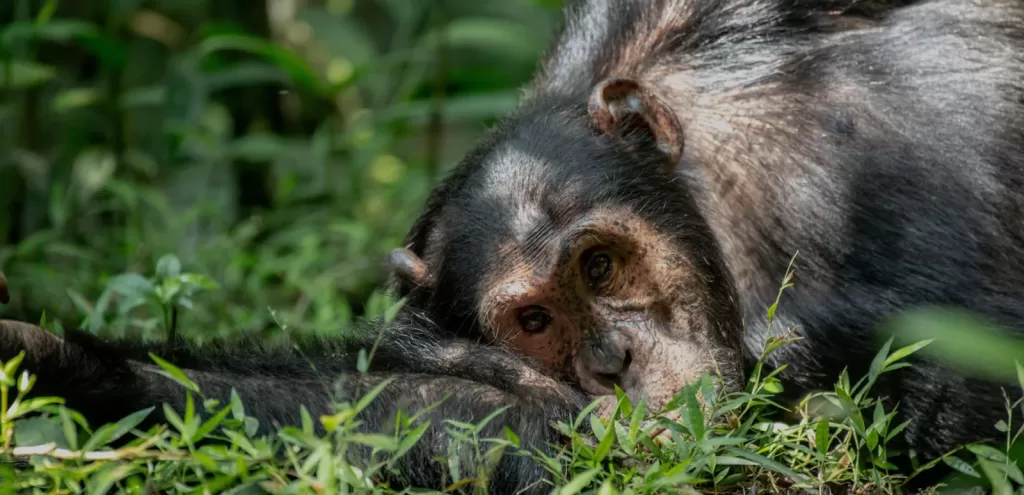
Kibale National Park – The Primate Capital of the World
Kibale National Park is one of Africa’s most remarkable tropical forests and the leading destination for chimpanzee tracking in Uganda. Located in western Uganda along the northern foothills of the legendary Rwenzori Mountains, the park covers approximately 794 square kilometres of lush rainforest and woodland ecosystems.
The forest forms an important ecological corridor linking with Queen Elizabeth National Park to the south, creating a vast wildlife landscape that supports diverse species.
Kibale National Park extends across the districts of Kamwenge, Kasese, Kyenjojo, and Kabarole, within a region well known for its fertile volcanic soils and spectacular crater lakes.
Africa’s Highest Concentration of Primates
Often referred to as the “Primate Capital of the World,” Kibale National Park hosts 13 primate species, the highest diversity recorded in East Africa.
The forest is home to more than 1,400 chimpanzees, making it one of the best places in Africa to observe these intelligent primates in their natural environment.
Other primates found in Kibale include:
-
Red colobus monkeys
-
The rare L’Hoest’s monkey
-
Black-and-white colobus monkeys
-
Blue monkeys
-
Grey-cheeked mangabeys
-
Red-tailed monkeys
-
Vervet monkeys
-
Bush babies and galagos
-
Pottos
Watching these primates move through the forest canopy is one of the most rewarding wildlife experiences in Uganda.
Biodiversity Beyond Primates
Kibale National Park is also home to a wide range of wildlife beyond its primate population.
The forest supports mammals such as:
-
Forest elephants
-
Buffalo
-
Bush pigs
-
Duikers
-
Bats
The park also shelters reptiles, amphibians, butterflies, and an extraordinary botanical diversity, with more than 250 recorded tree species.
Kibale’s exceptional biodiversity is managed and protected by the Uganda Wildlife Authority, ensuring long-term conservation of this vital ecosystem.
Birdwatching in Kibale National Park
With over 372 bird species, Kibale National Park is a dream destination for birdwatchers.
Some of the most notable species include:
-
Great Blue Turaco
-
African pitta
-
Green-breasted pitta
-
Yellow-spotted nicator
-
Crowned eagle
-
Black bee-eater
The park’s combination of rainforest, wetlands, and forest edges makes it an exceptional location for both Albertine Rift endemics and migratory birds.
Top Things to Do in Kibale National Park
Chimpanzee Tracking
Chimpanzee tracking is the most popular activity in Kibale National Park.
Guided treks depart from the Kanyanchu Visitor Centre in two daily sessions:
-
Morning session – 8:00 AM
-
Afternoon session – 2:00 PM
Groups are limited to six visitors per trek, ensuring minimal disturbance to the animals and a more intimate forest experience.
During the trek, visitors hike through the rainforest with experienced guides while searching for chimpanzee families moving through the forest canopy.
Strict conservation guidelines are followed to protect the chimpanzees and prevent the spread of human diseases.
Chimpanzee Habituation Experience
For travellers seeking a deeper primate experience, Kibale offers the Chimpanzee Habituation Experience. This unique activity allows visitors to spend an entire day with chimpanzee researchers, following a chimpanzee family as they gradually become accustomed to human presence.
The day begins early in the morning at the chimpanzees’ nesting site and continues until they build new nests for the night. This immersive experience offers rare insight into chimpanzee behaviour, communication, feeding habits, and social interactions.
Birdwatching in Bigodi Wetland Sanctuary
One of the best birding locations near Kibale is the community-run Bigodi Wetland Sanctuary. Located about 6 kilometres south of Kibale National Park, this conservation project protects the Magombe Swamp, an important habitat for wildlife and birds.
The wetland supports approximately 200 bird species, including:
-
Great blue turaco
-
Papyrus gonolek
-
Black-and-white casqued hornbill
-
Blue-headed sunbird
-
Red-chested paradise flycatcher
The sanctuary also shelters several primates, butterflies, and rare plant species.
Most importantly, tourism here directly supports local community development and conservation initiatives.
Nature Walks and Forest Trails
Guided nature walks provide a deeper understanding of the forest ecosystem.
Walks from Kanyanchu Visitor Centre usually depart at:
-
8:00 AM
-
10:00 AM
-
2:00 PM
These 2–3 hour walks allow visitors to explore forest trails while observing primates, birds, insects, and medicinal plants.
Nocturnal Forest Walks
Night walks reveal a completely different side of Kibale’s wildlife.
Accompanied by experienced guides, visitors venture into the forest to search for nocturnal species including:
-
Bush babies
-
Pottos
-
Nocturnal birds
-
Forest insects and amphibians
These walks typically last about two hours and offer a fascinating glimpse into the forest after dark.
Mpanga Falls Trail
A short drive from Kibale leads to the impressive Mpanga Falls, located along the Mpanga River. The waterfall plunges roughly 50 metres into a steep gorge, surrounded by lush vegetation and misty spray forest.
Visitors can explore the area through guided walks and discover the unique Cycad Trail, which highlights ancient plant species that thrive in this environment.
Sebitoli Sector and Kihingami Wetlands
The Sebitoli Sector, located about 15 kilometres east of Fort Portal, offers another rewarding nature experience. Guided walks in this region reveal a rich variety of primates, birds, and wetlands.
Birders’ may encounter species such as:
-
White-spotted flufftail
-
Red-bellied paradise flycatcher
-
Jameson’s wattle-eye
The wetlands also support otters, monkeys, and occasional chimpanzee sightings.
Crater Lakes Tour
The landscapes surrounding Kibale are dotted with dramatic volcanic crater lakes within the Ndali‑Kasenda Crater Lakes region.
Popular lakes include:
-
Lake Nyabikere
-
Lake Nkuruba
-
Lake Nyinambuga
-
Lake Kifuraka
-
Lake Nyamasangari
These scenic lakes offer activities such as:
-
Canoeing
-
Swimming
-
Sport fishing
-
Scenic nature walks
The crater lakes region is also famous for spectacular viewpoints across western Uganda’s rolling hills and forests.
Cultural Experiences with KAFRED
Community tours organised by the Kibale Association for Rural and Environmental Development (KAFRED) provide visitors with meaningful cultural experiences.
Village walks introduce travellers to the traditions of the Batooro people, including:
-
Traditional healing practices
-
Local farming techniques
-
Community schools and churches
-
Indigenous food preparation
These experiences support community livelihoods while preserving cultural heritage.
Where to stay in Kibale National Park
Primate Lodge
Primate Lodge Kibale is located deep in the forest and right next door to the starting point for Chimpanzee Tracking Briefing Point. The lodge features Nine 9 spacious and en-suite Luxury Cottages, 7 mid-level/standard cottages, a Family Cottage, a Honeymoon Cottage, and a campsite.
Furthermore, all cottages are secluded deep in the forest with great views of the forest surroundings. Other facilities a massage parlor, a spacious dining terrace, a well-stocked bar, a secluded lounge area with a small library, and a campfire place.
Kyaninga Lodge
The Lodge sits just 55 minutes away from the captivating Kibale Forest, boasting stunning views of Lake Kyaninga and the majestic Mountains of the Moon.
Accommodation comprises nine charming en-suite Cottages, each offering private balconies or patios for a serene retreat. Guests can indulge in various amenities, including an inviting outdoor pool, a relaxing terrace, a tennis court for recreation, a rejuvenating sauna, and a comprehensive wellness center.
Further enhancing the experience is a tranquil private garden, a cozy lounge area perfect for unwinding, and a restaurant serving delicious meals amidst the picturesque surroundings.
Chimpundu Lodge
The lodge boasts 18 luxurious cottages, each offering a breathtaking vista of the surrounding landscape and wildlife directly from your own secluded deck. Every cottage is furnished with en-suite bathrooms and personal sundecks for your comfort.
Additionally, guests can enjoy a range of amenities such as a restaurant/dining area, a refreshing swimming pool, a charming gazebo, a cozy lounge, conference facilities, and a rejuvenating spa.
Crater Safari Lodge
Crater Safari Lodge sits on the shores of Lake Nyabikere near Fort Portal, approximately 35km from Kibale Forest. The lodge offers accommodation in 14 deluxe thatched chalets, each featuring spacious wooden balconies overlooking either the pool or the serene surroundings. Three of these chalets come with hammocks for added relaxation.
Additionally, there are 10 standard cottages, all facing the pool and offering partial views of the crater. The lodge’s central area includes a large wooden structure comprising an open-plan lounge area with a balcony, a dining space, and a cozy bar area for intimate gatherings.
Guests can enjoy outdoor amenities such as a swimming pool, a separate pool for children, and a terrace for soaking in the natural beauty of the area.
Ndali Lodge
The lodge rests atop the rim of a dormant volcano, boasting 8 cottages crafted in the traditional African architectural style, adorned with wood, airy stone, and roofs thatched with grass. Each cottage is equipped with en-suite facilities, comprising a bathroom furnished with a flush toilet, basin, shower, and a standalone bath.
Moreover, guests are treated to private balconies attached to the rooms, offering breathtaking vistas of the crater, the Rwenzori Mountains, and the encompassing landscapes.
Additional amenities encompass the main lodge, which hosts a reception, lounge, dining area, bar, and a spacious veranda for guests to relish the serene surroundings.
Papaya Lake Lodge.
The lodge is situated amidst the serene landscape, nestled snugly between two dormant volcanoes, bordered by the tranquil waters of Lyantonde and Kifuruka lakes, offering breathtaking vistas of the majestic Ruwenzori Mountain Range.
Comprising of 8 cottages, each furnished with a combination of one king-size and one single bed, adorned with locally sourced stone-decorated bathrooms featuring shower units, and complemented by verandas furnished with comfortable deckchairs.
The ninth cottage, known as the Family Cottage, stands out as a two-level villa, boasting three bedrooms, a cozy living room complete with a fireplace, a generously sized bathroom, and an expansive terrace perfect for soaking in the surrounding beauty.
Among its amenities, guests can enjoy the offerings of a restaurant and bar, unwind by the picturesque swimming pool accompanied by a scenic terrace, and explore the craft shop showcasing local artisanal creations.
Turaco Tree Top
Turaco Treetops boasts 8 lavish cottages nestled in secluded spots within the jungle. These cottages offer ample space, boasting expansive windows and wooden decks outdoors, offering breathtaking vistas of Kibale Forest.
Crafted to seamlessly blend modernity with an authentic ‘African feel’, the cottages incorporate clean lines alongside natural elements such as wood, creating an immersive indoor-outdoor experience.
In addition to the cottages, Turaco Treetops provides 8 standard rooms housed in 4 duplex buildings situated across 2 forest sites, offering exceptional affordability without compromising on quality.
Complementing the accommodations is a range of facilities, including a central lodge, a refined restaurant, a cozy lounge area with a crackling fireplace, a well-stocked bar, an outdoor terrace, and a refreshing swimming pool.
Additionally, guests can relish panoramic views of the forest and the snow-capped Rwenzori mountains from the first-floor lounge.
The best time to visit Kibale National Park
The dry season spans from June to September, and December to February, characterized by its aridity and heat. These months are optimal for forest exploration, as the foliage thins out, facilitating better visibility of primates such as chimpanzees and monkeys, which tend to forage closer to the ground. With reduced rainfall, trails become more manageable to traverse, devoid of slipperiness.
Contrarily, the wet season extends from March to May, and September to November. During this period, lush greenery dominates, attracting migratory birds to the park, rendering it a prime time for bird-watching enthusiasts.
However, for activities like primate trekking, navigating nature trails becomes more challenging due to increased slipperiness, making them less favorable for exploration.
How to get to Kibale National Park
Kibale National Park can be accessed from Kampala or Entebbe via the Mubende-Kyegegwa-Kyenjojo route, with a travel time of about 6-7 hours by road. Alternatively, Aerolink Uganda provides daily domestic flights from Entebbe to Kasese Airstrip, lasting approximately 1 hour and 15 minutes.
From Kasese Airstrip, it’s a 75 km drive to Fort Portal, typically taking around 1 hour and 30 minutes by road to reach the park.
Plan Your Kibale Chimpanzee Safari
Kibale National Park offers one of the most rewarding wildlife experiences in Uganda. From chimpanzee tracking and birdwatching to crater lake tours and cultural encounters, the park delivers an unforgettable journey into Africa’s tropical rainforest.
Whether you are interested in primates, birdwatching, photography, or nature, Kibale provides extraordinary opportunities to explore Uganda’s biodiversity.
Ready to track chimpanzees in Kibale National Park?
Let Travelers Link Africa design your personalized Uganda safari with expert guides, hand-picked lodges, and immersive nature experiences.
Contact us today to start planning your chimpanzee safari adventure.