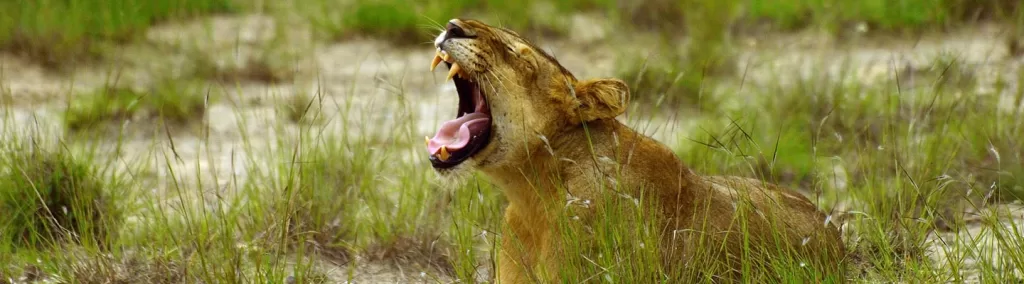
Queen Elizabeth National Park – Nature’s Grand Symphony
Queen Elizabeth National Park is one of Uganda’s most celebrated wildlife destinations, located in the western branch of the East African Rift Valley. Spanning approximately 1,978 square kilometres across Kamwenge and Kanungu districts, the park is widely recognised as Uganda’s premier game-viewing destination.
The park lies within a remarkable landscape shaped by volcanic activity, ancient lakes, rolling savannah plains, and dramatic escarpments.
To the west, the park borders Lake Edward and the Ishasha River, which also mark the frontier with the Democratic Republic of the Congo. The northern boundary stretches toward the town of Kasese, beneath the foothills of the legendary Rwenzori Mountains, often called the “Mountains of the Moon.”
To the east lies Lake George, alongside the dramatic Kyambura Gorge and the rich forests of Kalinzu Forest Reserve. The southern boundary extends toward Kigezi Wildlife Reserve.
Diverse Ecosystems and Wildlife Encounters
Queen Elizabeth National Park is divided into several wildlife sectors, each offering unique landscapes and safari experiences.
The Kasenyi Plains in the northern part of the park feature sweeping savannah grasslands that attract large populations of Uganda kob, buffalo, elephants, and predators such as lions and leopards.
Further south lies the famous Ishasha Sector, internationally known for its tree-climbing lions. These remarkable predators are often seen resting on the branches of large fig trees, a rare behaviour observed in only a few locations in Africa. The Ishasha population includes roughly 40 lions across several prides, making the area one of the most fascinating lion habitats on the continent.
For travellers seeking an authentic safari experience, Queen Elizabeth National Park offers an extraordinary combination of wildlife, landscapes, and cultural encounters.
Wildlife and Biodiversity
Queen Elizabeth National Park supports one of the most diverse ecosystems in East Africa. The park is home to over 100 mammal species including:
-
Lions
-
African elephants
-
Leopards
-
Buffalo
-
Chimpanzees
-
Uganda kob
-
Giant forest hogs
In addition, the park hosts more than 600 bird species, making it one of Africa’s most important birding destinations.
The Kazinga Channel – The Park’s Wildlife Lifeline
At the heart of the park flows the famous Kazinga Channel, a natural waterway linking Lake George and Lake Edward. Stretching about 32 kilometres, this channel forms one of the most spectacular wildlife viewing locations in Africa.
Boat safaris along the channel reveal extraordinary scenes of wildlife gathering along the shores. Visitors regularly observe:
-
Hundreds of hippos
-
Large herds of buffalo
-
Elephants drinking along the banks
-
Crocodiles basking in the sun
-
Numerous water birds
The channel also attracts an incredible diversity of birdlife, making it a highlight for both wildlife lovers and birdwatchers.
Top Things to Do in Queen Elizabeth National Park
Game Drives in Kasenyi Plains and Ishasha Sector
Game drives across the Kasenyi savannah plains offer some of the best wildlife viewing in Uganda. These open grasslands attract large concentrations of wildlife including elephants, warthogs, antelope, and buffalo. Predators such as lions and leopards patrol the area, creating thrilling safari moments for visitors.
The Ishasha Sector, located in the southern part of the park, offers a completely different landscape. This remote wilderness is famous for its tree-climbing lions, which frequently rest in large fig trees overlooking the plains.
Seeing these lions stretched across tree branches is one of the most memorable wildlife experiences in Uganda.
Kazinga Channel Boat Cruise
One of the most popular activities in the park is a boat cruise along the Kazinga Channel. From the Mweya Peninsula, visitors board launch boats for a two-hour journey through one of Africa’s richest wildlife corridors.
Daily departures typically take place at:
-
9:00 AM
-
11:00 AM
-
3:00 PM
-
5:00 PM
During the cruise, visitors may see hundreds of hippos, elephants, buffalo, crocodiles, and more than 60 bird species, all thriving along the water’s edge.
Chimpanzee Tracking in Kyambura Gorge
Chimpanzee tracking in Kyambura Gorge is one of the park’s most exciting primate experiences. Known as the “Valley of Apes,” this dramatic gorge plunges about 100 metres deep and stretches roughly 16 kilometres through the savannah landscape.
The forest within the gorge shelters a small population of habituated chimpanzees, along with other primates including:
-
Black-and-white colobus monkeys
-
Vervet monkeys
-
Olive baboons
-
Red-tailed monkeys
Tracking experiences take 2–4 hours, with departures typically at 8:00 AM and 1:00 PM from Fig Tree Camp.
Birdwatching Safaris
With over 600 recorded bird species, Queen Elizabeth National Park is a paradise for bird enthusiasts.
The park’s varied habitats support both forest and savannah species, including:
-
Grey-headed kingfisher
-
Martial eagle
-
White-winged tern
-
African fish eagle
Top birding locations include:
-
Kazinga Channel
-
Mweya Peninsula
-
Maramagambo Forest
-
Kasenyi Plains
-
Lake Kikorongo
-
Katunguru Bridge area
Nature Walks in Maramagambo Forest
Guided walks in Maramagambo Forest reveal another dimension of the park’s biodiversity. These walks, lasting 2–6 hours, explore lush forest ecosystems filled with birds, primates, butterflies, and ancient trees.
Popular trails include:
-
Waterfall Trail – A 4-hour hike leading to Kilyantama Waterfall
-
River Trail – A short walk along the Kajojo River
-
Forest Trail – Scenic landscapes and wildlife sightings
-
Palm Trail – Featuring impressive Raphia palms and unique vegetation
Cultural and Community Experiences
Queen Elizabeth National Park also offers meaningful community-based tourism experiences.
Kikorongo Women Community Project
Founded in 2007, the Kikorongo Women Community initiative empowers local women through craft production and cultural tourism. Visitors can watch artisans create beautiful baskets, beads, and belts using natural fibres and recycled materials.
The Kikorongo Equator Cultural Performers also present traditional music, dance, and storytelling, giving visitors a deeper connection to local culture.
Crater Lakes and Scenic Drives
The landscapes surrounding Queen Elizabeth National Park include dramatic volcanic crater fields.
Key areas include:
-
Katwe Explosion Craters
-
Bunyaruguru Crater Field
-
Ndali-Kasenda Crater Field
The 27-kilometre Crater Drive offers breathtaking views across crater lakes, the Rwenzori Mountains, Lake George, and the Kazinga Channel.
Lake Katwe Salt Experience
Lake Katwe is one of the few salt lakes in East Africa where traditional salt mining continues. For centuries, local communities have extracted salt by hand from the lake’s mineral-rich waters. Visitors can observe the process and learn about the cultural and economic importance of this historic industry.
Nearby lies Lake Munyanyange, an important bird sanctuary where flamingos are sometimes seen between August and November.
Where to stay in Queen Elizabeth National Park
Elephant Plains Lodge
Perched 941m above sea level on the western escarpment of the Albertine rift in the northeastern part of the park, the lodge provides panoramic views of the open grasslands stretching to Lake George.
Additionally, it offers 6 double/twin ensuite cottages and 2 family cottages with 2 bedrooms and 2 bathrooms. Moreover, all 10 cottages boast spacious verandas with stunning park views.
Furthermore, guests can enjoy various facilities, including a lounge, bar, restaurant, dining room with a spacious deck, swimming pool, gardens, nature trail walkways, craft shop, free WIFI, wheelchair accessibility, and an open-top game vehicle.
Mweya Safari Lodge
The lodge is located on the Mweya Peninsula and features 16 Classic Guest Rooms, 28 Deluxe Guest Rooms, 2 Wheelchair Friendly Guest Rooms (including Classic rooms), 2 Suites, 2 Safari Tents, 2 Family Cottages, the Queen’s Cottage, the Presidential Cottage, and Queen’s Pavilion Conference Facilities.
Other facilities include Marasa Africa Spa, Fitness Centre, Poolside deck overlooking the Kazinga Channel, Gift Boutique Store, Business Centre, Kazinga Restaurant, and Terrace.
Furthermore, there is the Tembo Bar, the Poolside deck overlooking the Kazinga Channel, and the Bush Dining in Queen Elizabeth National Park.
Buffalo Safari Lodge
The Lodge is located at Queen Elizabeth Park, Katunguru Bridge, near the magical Kazinga channel, 1km off the Kasese-Mbarara road, Western Uganda.
The lodge offers a total of 17 rooms, including both standard and deluxe cottages. Each room is thoughtfully designed to maximize the spectacular views of the surrounding landscape while providing a cool retreat from the scorching savannah heat of Queen Elizabeth National Park.
From the bed to the sitting area and even the upper balcony, guests can enjoy uninterrupted vistas and refreshing comfort.
Other facilities include a restaurant and dining room, a lounge and bar area, a swimming pool, and a large terrace overlooking the park.
Bush Lodge
The lodge has 12 en-suite bandas and two safari tents for an authentic bush experience. 10 non-self-contained tents are budget-friendly.
Furthermore, the tents have comfortable beds and power outlets. Guests can enjoy a starlit shower in the ensuite bathroom that has an outdoor shower. The lodge also has a large dining tent and a bar area for guests to enjoy.
Ishasha Wilderness Camp.
The camp is located in the Southern Ishasha sector of Queen Elizabeth National Park, on the Ntungwe River. It is home to the famous tree-climbing lions.
The camp has eight Safari tent-styled rooms, each of which has a private verandah that overlooks the river. The tents are all en-suite and comfortably furnished with large mosquito-netted beds.
They also have hot “bush” showers, running water for the hand basins, and a flushing “eco-friendly” toilet.
Other amenities at the camp include a thatched central lounge and dining area, a campfire area, bush dining, sundowners, and a gift shop.
The best time to visit Queen Elizabeth National Park
Experience the Park’s two distinct seasons: the dry and the wet. During December to March and June to August, the dry season prevails, bringing scarcity of water.
This scarcity draws wildlife closer to reliable sources and thins out vegetation, enhancing wildlife viewing.
In contrast, the wet or green season from April to May and September to November welcomes increased rainfall. This results in lush greenery but fewer animal sightings.
Yet, it’s the prime time for migratory bird watching. This season offers stunning landscapes for photography and often discounted lodge rates.
For travelers in pursuit of optimal weather conditions, June to September is the sweet spot. Boasting low rainfall and abundant food sources, it’s perfect for bird watching.
How to get to Queen Elizabeth National Park.
Approximately 410 km west of Kampala, Uganda’s capital, lies Queen Elizabeth National Park. Travelers can reach it via a 7 to 8-hour drive, enjoying scenic views along the way.
Alternatively, flights from Entebbe International Airport (EBB) to airstrips in Kasese, Mweya, or Kihihi (for Ishasha) offer a quicker option.
Furthermore, the aerial route provides a stunning perspective of Uganda’s landscapes, enhancing the safari experience.
Plan Your Queen Elizabeth Safari.
Queen Elizabeth National Park offers a rich combination of wildlife safaris, primate encounters, boat cruises, birdwatching, scenic landscapes, and cultural experiences.
Whether you are exploring the open plains of Kasenyi, watching hippos along the Kazinga Channel, or searching for tree-climbing lions in Ishasha, the park delivers unforgettable safari moments.
Ready to experience the wonders of Queen Elizabeth National Park?
Let Travelers Link Africa design your unforgettable Uganda safari with expert guides, carefully selected lodges, and authentic cultural experiences.
Contact us today to start planning your Uganda wildlife adventure.